If you have been watching Bhubaneswar's residential map for the last five years, you have almost certainly noticed where the centre of gravity is shifting. Old Town is done. Chandrasekharpur is mature. Patia — and specifically Kalarahanga — is where the next chapter is being written.
This is not a hunch. It is the compound effect of four things happening in the same square kilometre at the same time: an upgraded railway station, a cluster of India's most respected educational institutions, a fast-growing IT and services corridor, and land that is still meaningfully more affordable than the central belt. If you are shortlisting where to put your next home, this is the case for looking at Kalarahanga first.
The four forces reshaping the neighbourhood
1. Patia Railway Station Square
Patia Station has quietly become one of the most convenient boarding points in the city. Direct connectivity to Kolkata, Chennai, Puri and Vizag from a station that is walkable from Kalarahanga — versus a 40-minute ride to Bhubaneswar Junction — changes how families weigh travel time. The station square itself is being upgraded with wider approach roads, better retail and a proper drop-off zone.
2. The education corridor
Within a 15-minute radius you have:
- KIIT University — 25,000+ students across 28 schools
- KIMS Hospital & Medical College — one of eastern India's largest teaching hospitals
- ODM Educational Group — schools serving over 10,000 students
- DAV Public School, Chandrasekharpur — a short drive
- SAI International — nearby in the IRC Village side
For young families, this cluster is decisive. A single-drop-off school run is possible for many households — and the daily savings in time and mental load compound over years.
3. Infocity and the services corridor
Infocity is a 10-minute drive. Kalarahanga sits at the sweet spot where dual-income tech families can live close enough to both spouses' offices without either committing to a 40-minute commute. TCS, Infosys, Mindtree, Genpact and a growing wave of GCCs all draw daily traffic through this corridor.
4. Land economics that still make sense
Compared to per-square-foot rates in Chandrasekharpur or IRC Village, Kalarahanga is still 15–25% more affordable for equivalent build quality — while offering the same or better connectivity. That gap will close. Buyers who move in the next 24 months will capture the appreciation.
The pattern is familiar. Chandrasekharpur was where Kalarahanga is now, exactly one property cycle ago. The buyers who moved in early saw their homes appreciate 2× in seven years. The infrastructure that made that happen is now built out here.
Who is Kalarahanga for?
Three profiles keep coming up in our conversations with prospective buyers:
- Dual-income tech families — Infocity commute plus international school access in one address.
- Doctors and medical professionals — KIMS is next door, and the growing hospital ecosystem means practice options for years.
- NRI investors from Odisha — parents remain close to family, children get international-standard education, and the asset appreciates on a well-understood curve.
What to look for in a home here
Not every project on paper delivers on the location's promise. When we advise buyers, we tell them to pressure-test three things before signing:
- Vertical density — the best plots are being built to 26 storeys or above. Mid-rise projects will feel dated within a decade.
- Genuine amenity depth — a "clubhouse" is not enough. Look for 30,000+ sq.ft. of amenities and named partnerships (branded spa, professionally-run gym).
- Proximity to the station square without frontage on the highway — you want walkability without the traffic.
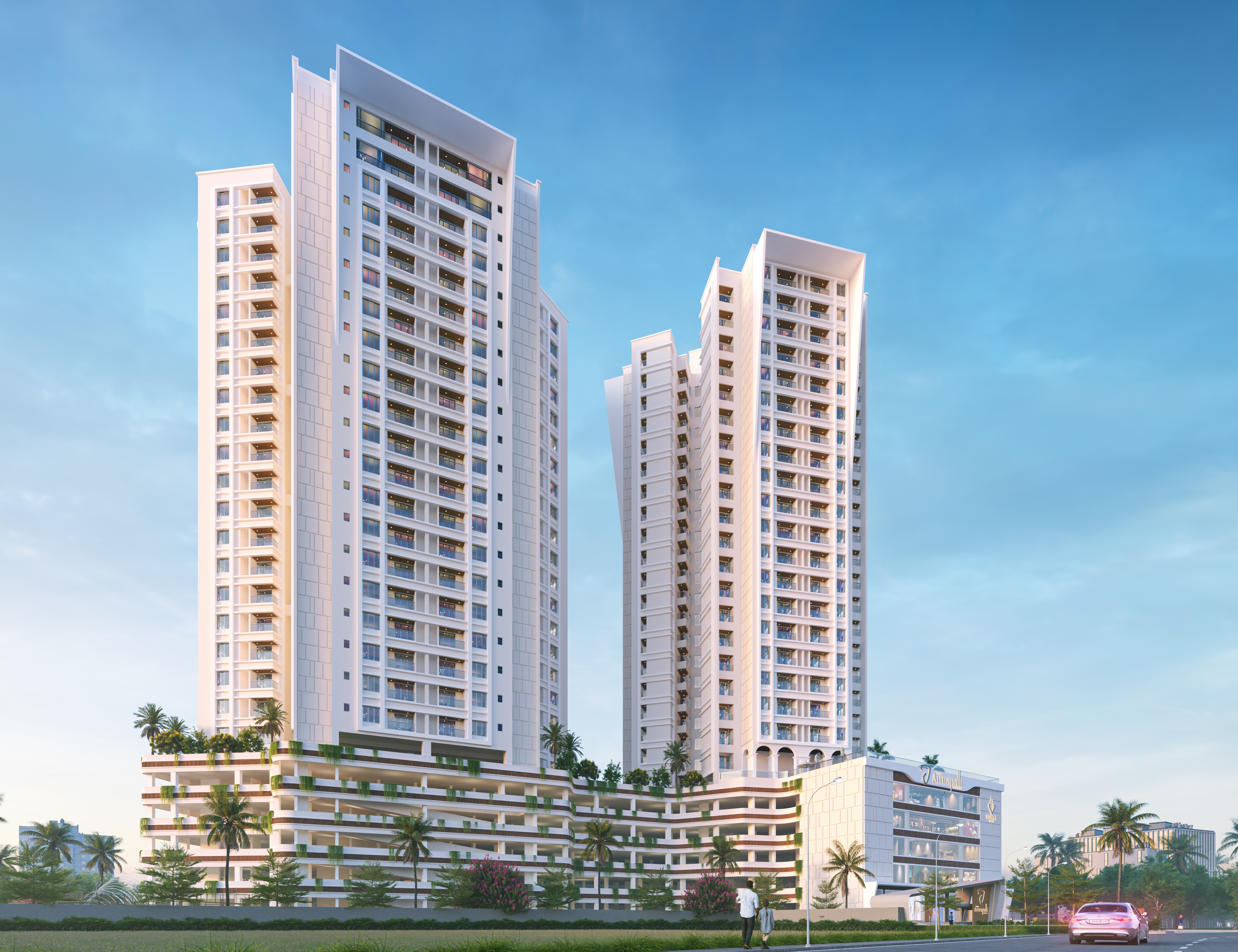
Vumee Amrapalli was designed with exactly this brief. Two 26-storey towers on a strategic Kalarahanga plot, 30,000+ sq.ft. of amenities across the podium, and a walkable link to Patia Station Square. If the neighbourhood is right for you, it is worth booking a site visit to see the difference in person.